Agentic AI: what the term actually means, and what it doesn't
Gartner expects over 40% of agentic AI projects to be cancelled by the end of 2027, and says most vendors using the word aren't selling agents at all. A look at where the definition landed.
“Agentic” went from a research term to a sticker on almost every AI product in about eighteen months. Two publications from the last couple of years are useful for cutting through it: one from a model developer setting out what an agent is, and one from an analyst firm estimating how many so-called agents aren't.
The definition that stuck
In December 2024 Anthropic published “Building effective agents,” based on its work with dozens of teams building with large language models. It drew a line that has since become common shorthand. Workflows are systems where the model and its tools run along paths written in code ahead of time. Agents are systems where the model decides its own next step and which tools to use, in a loop, until it reaches a stopping point.
The same piece made a less quoted point: the most successful teams it worked with used simple, composable patterns rather than complex frameworks, and it advised starting with the simplest thing that works. Often that's a single well-built model call. Agents add flexibility, but they also add cost, latency and room for errors to compound.
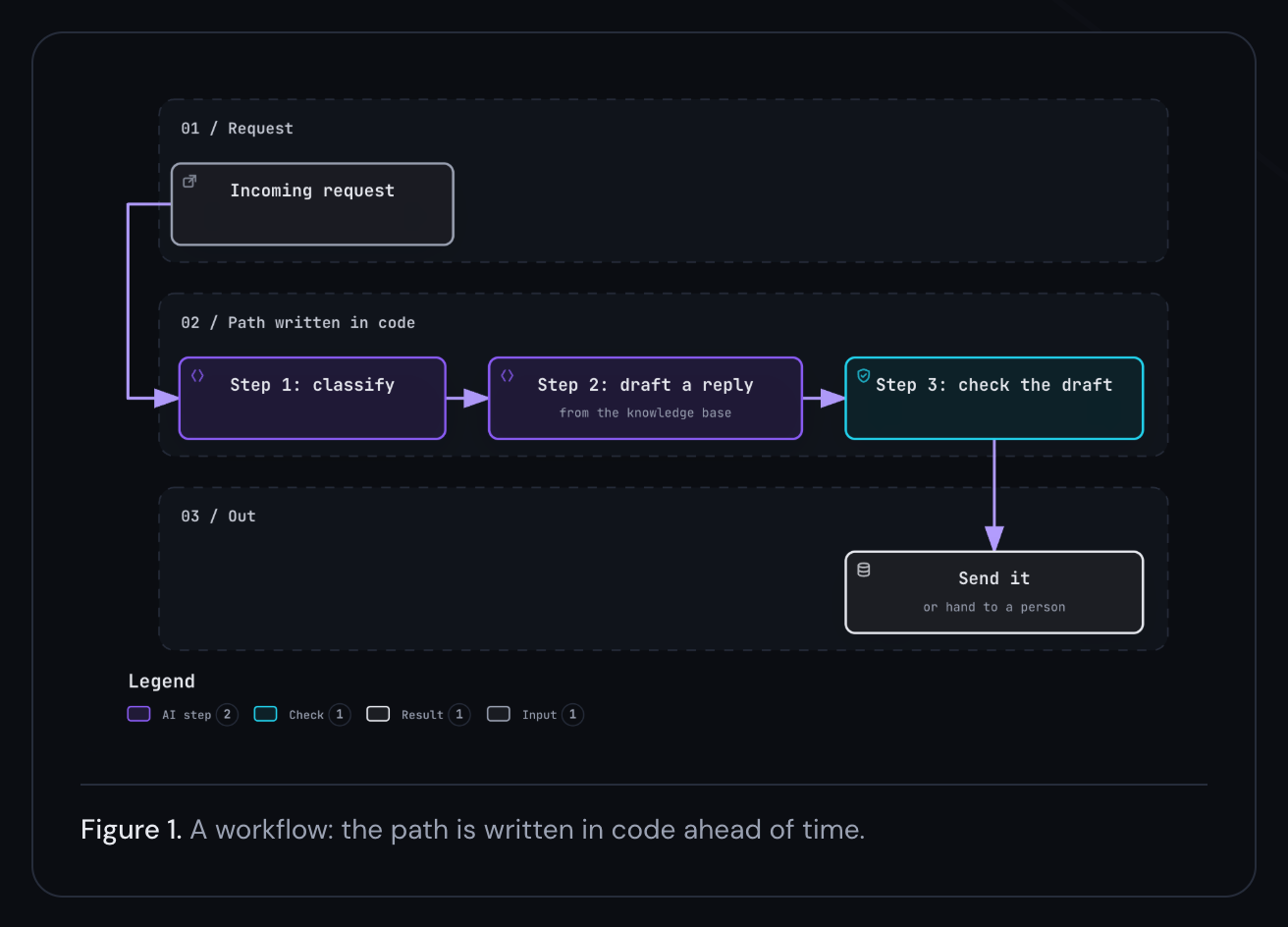
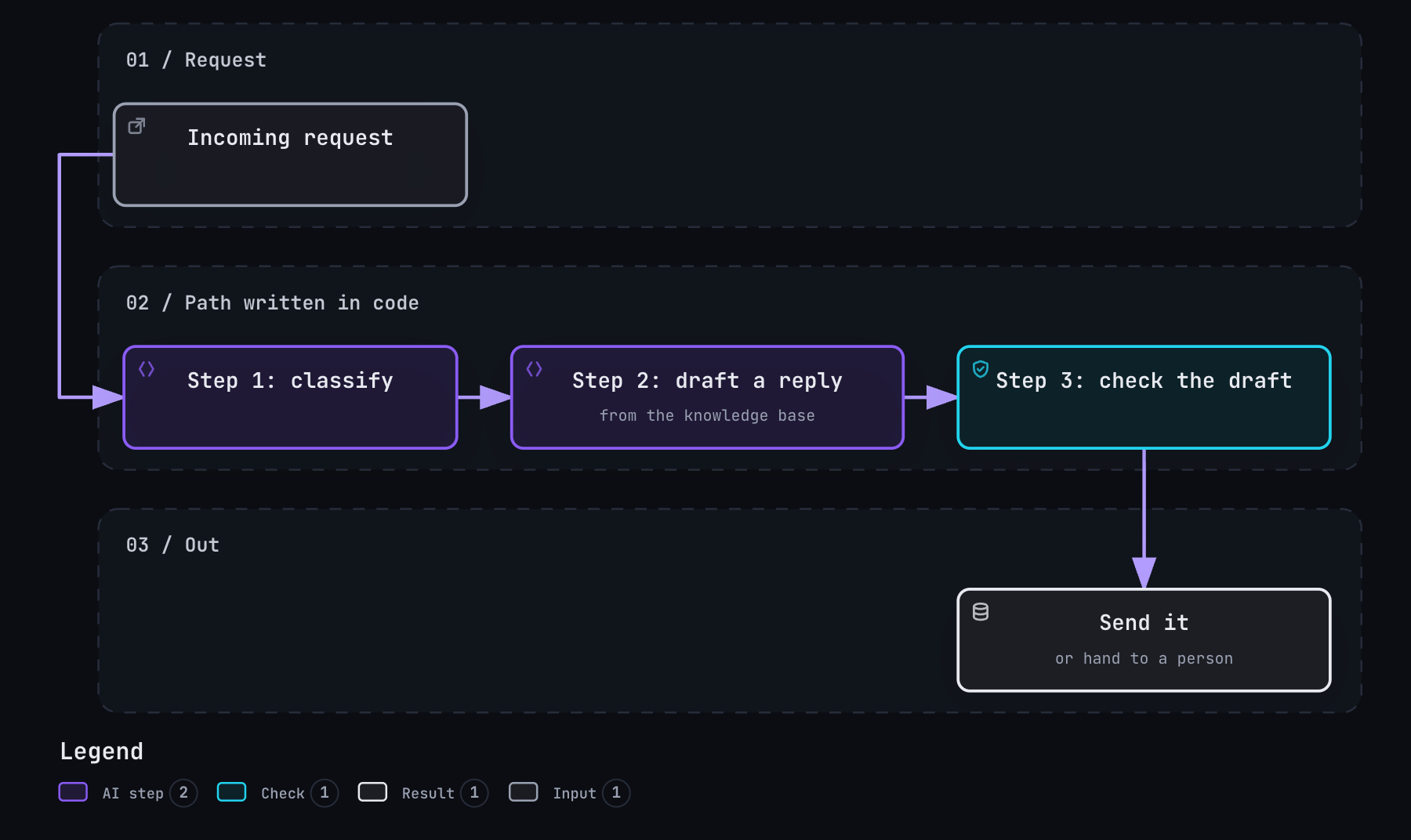
Scroll sideways to see the whole diagram.
“Agent washing”
In June 2025 Gartner predicted that over 40% of agentic AI projects will be cancelled by the end of 2027, citing rising costs, unclear business value and weak risk controls. It also named a trend it called “agent washing”: rebranding chatbots, robotic process automation and AI assistants as agents without adding real agentic capability. By Gartner's estimate, only about 130 of the thousands of vendors claiming agentic products actually offer them.
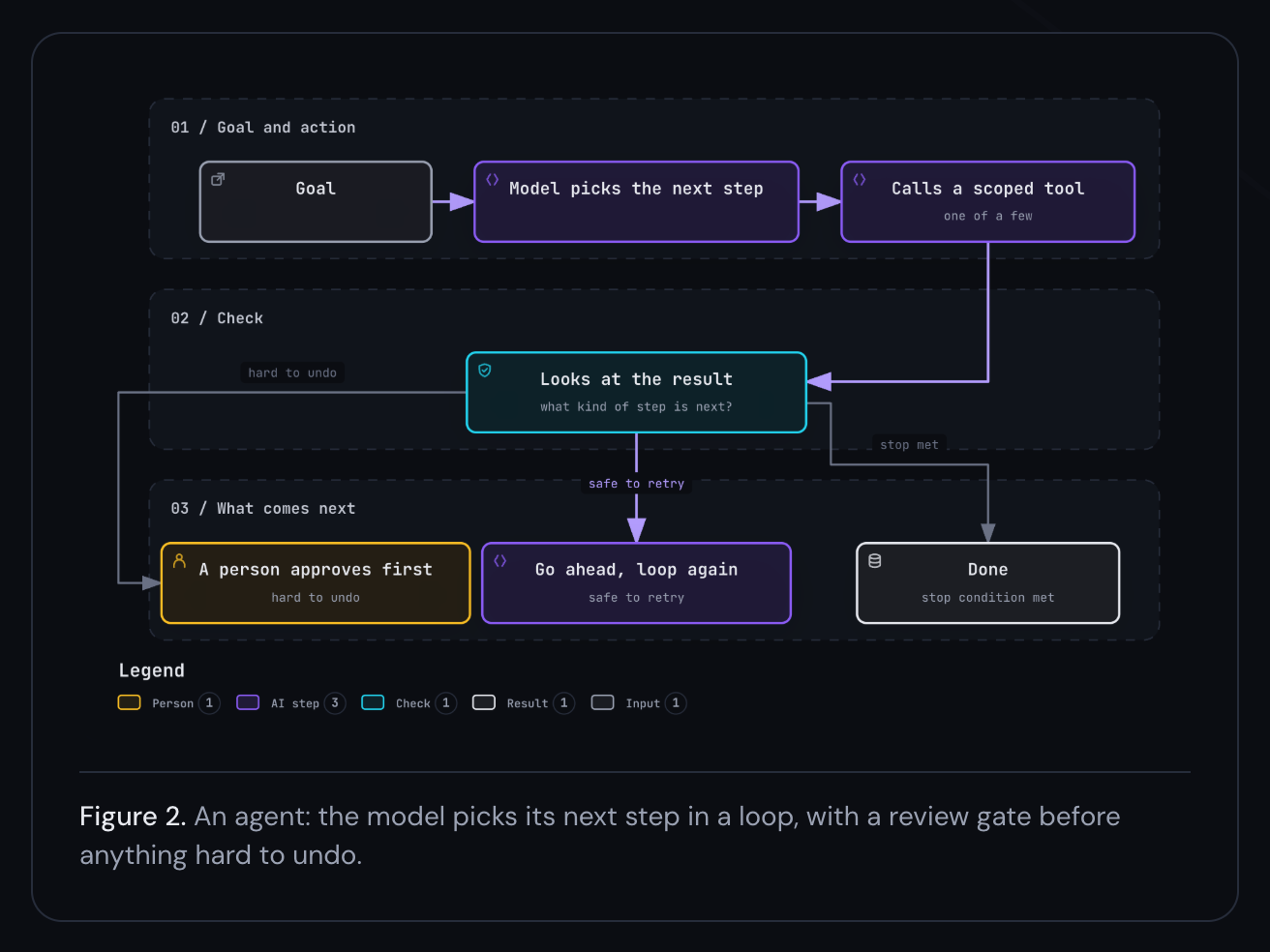
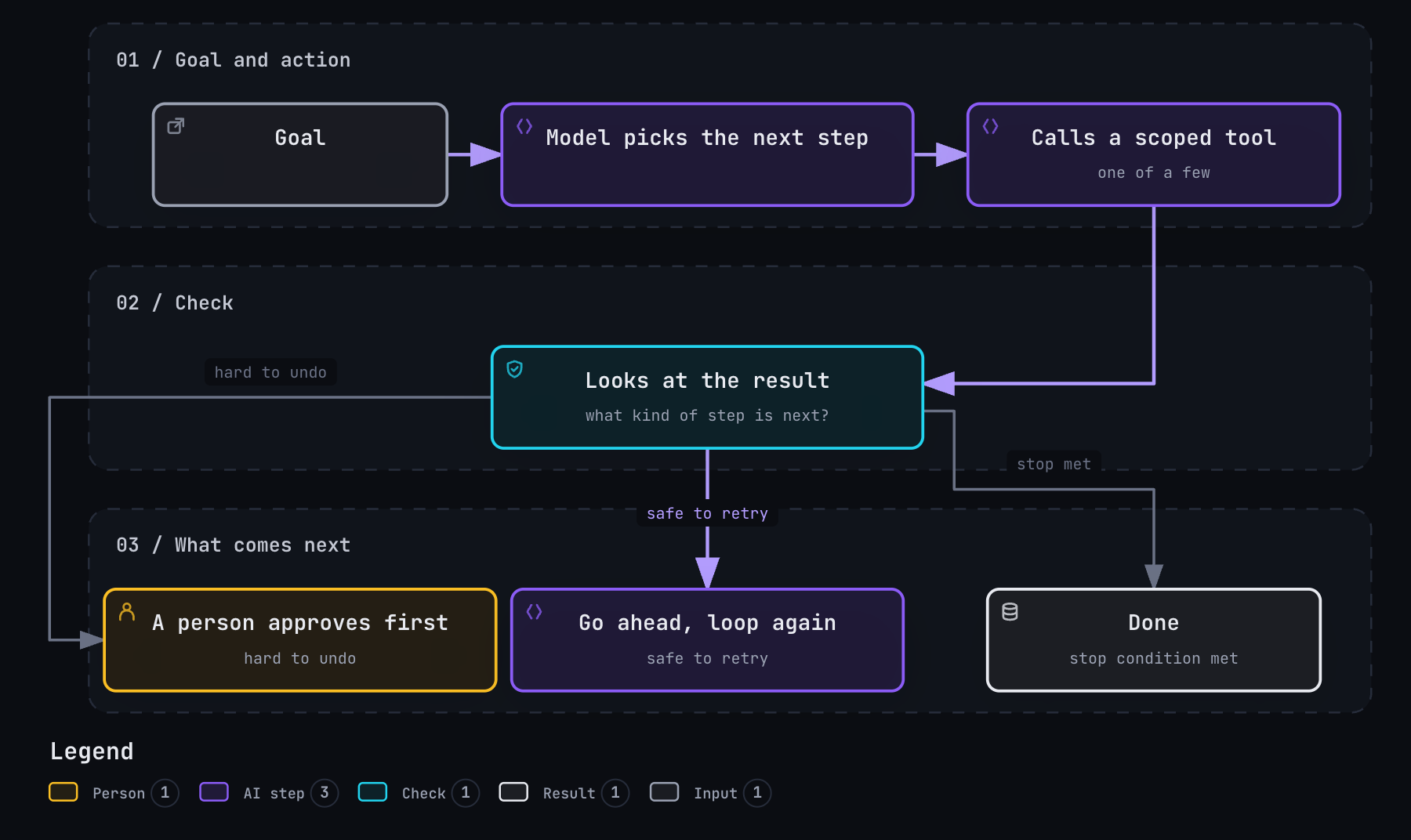
Scroll sideways to see the whole diagram.
Why the distinction matters
The two sources fit together. If most products labelled agentic are really workflows or chatbots, that isn't necessarily bad. Anthropic's guidance suggests a workflow is often the better design. The problem is buying one while expecting the other, or building a true agent where a workflow would have done.
A narrow agent with three or four tools and a clear stopping point is easy to reason about and monitor. A system with a dozen tools, no clear end and no review before it takes an action that matters is the kind of project those cancellation forecasts are about. When it fails, it's rarely because the model wasn't capable enough. It's because nobody limited what it could do on its own.
What to ask
- Does the model choose its next step, or follow a fixed path?
- Can it do something hard to undo before a person sees it?
- How would you find out it made a bad call three steps into a run, not just in the final answer?
A vendor who can't answer those clearly is selling the word, not the system.
Where X-GenAI fits
When we build agents and automations, we start with the simplest design that works and add autonomy only where it pays for itself, with review points before anything irreversible.
Sources
Anthropic (December 2024). Building effective agents.
Gartner (25 June 2025). Gartner Predicts Over 40% of Agentic AI Projects Will Be Canceled by End of 2027. Press release.
Get new posts by email
AI updates, trend breakdowns, and picks for the certifications worth your time, a few times a month, when something's worth sending.
Have something like this to automate?